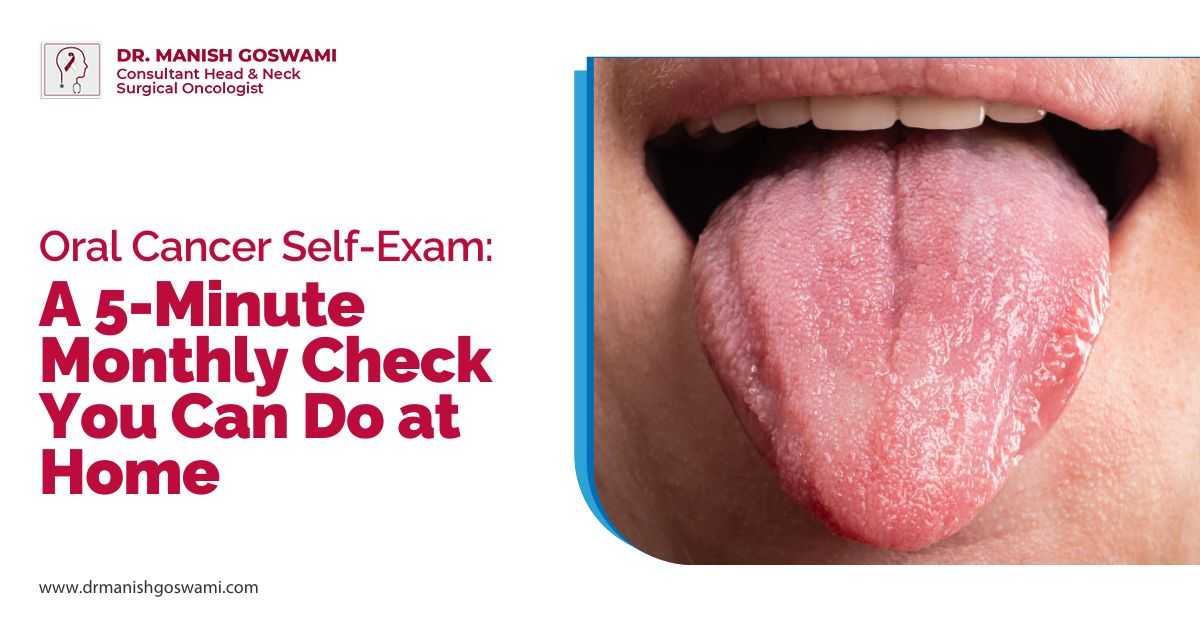




Everyone should take time from their busy life and do a 5-minute oral cancer self-exam once a month. Following this simple habit can save your life.
Like other symptoms, your mouth also gives early signs. In this, you can see changes in your lips, gums, tongue, cheeks, and throat. Regular checkups help you to stay aware of your oral health and take proper medical advice whenever it is needed.
But if you notice any unusual symptoms or changes, then you should not ignore this and consult with the cancer doctor in Siliguri for the right guidance and timely treatment.
What Is Oral Cancer?
There are many different types of cancer, among them one is oral cancer. This type of cancer develops in tissues of the mouth, which include the lips, tongue, gums, inner cheeks, roof of the mouth, and throat area.
Why Is Early Detection of Oral Cancer Important?
Improves Treatment Success
Early detection of oral cancer helps doctors start treatment, which improves the chance of successful management.
Helps Prevent the Condition from Spreading
Early detection can identify the issues earlier before they grow. This helps prevent conditions from spreading to nearby tissues.
Allows More Treatment Options
When the issue is found earlier, this gives enough time to take the right treatment option according to the condition.
Reduces the Risk of Serious Complications
If the condition is treated on time, this will reduce the risk of complications of major health issues.
Supports Better Recovery
Early diagnosis may help patients recover faster and maintain better oral functions like speaking, chewing, and swallowing.
Encourages Better Oral Health Awareness
When people check for oral cancer or visit the doctor, it helps them become aware of changes in their mouth and take action whenever needed.
Who Is at Risk of Developing Oral Cancer?
People who have the above habits increase the chance of developing oral cancer:
- Tobacco users (smoking or chewing tobacco)
- Regular alcohol consumers
- People using both tobacco and alcohol
- People with HPV infection
- People above 40 years of age
- If someone has a family history of cancer
- People with a previous history of oral cancer
- People who do not maintain oral hygiene
- People with long-term mouth irritation or injuries
- Those people who have weak immune systems
- People with prolonged sun exposure on lips
- Those who avoid regular dental check-ups
- People with unhealthy dietary habits
- exposed to harmful chemicals or substances
- People who ignore persistent mouth changes
- People with certain medical conditions affecting immunity
How to Perform an Oral Cancer Self-Exam in 5 minutes at Home
Here are the following simple steps to check for oral cancer at home:
Step 1: Check Your Face and Neck
Start by examining your face and neck from the outside. Stand in front of a mirror and look for any changes that appear different from your normal appearance.
Observe:
- Swelling on one side of your face or around your neck
- Changes in skin colour or texture
- Unusual bumps or areas that look different
- Difficulty moving your jaw normally
Step 2: Examine Your Lips
Identifying the cancer by your lips is one of the easiest ways for a self-exam. Pull your lips slightly outward and examine both the outer and inner surfaces.
Notice:
- Sores or cuts that do not heal
- White or red patches
- Changes in colour
- Thickened areas or unusual texture
Step 3: Inspect Your Gums
Carefully check your upper and lower gums using a mirror and good lighting. Move your lips away from your gums so you can see the entire area clearly.
Pay attention to:
- Red or white patches
- Swelling or unusual growths
- Bleeding without a clear reason
- Areas that feel painful or different
Step 4: Look Inside Your Cheeks
The inside of your cheeks can sometimes develop changes that are difficult to notice during daily activities. Use your fingers to gently pull your cheeks outward and check both sides.
Notice:
- White or red patches
- Sores that do not heal
- Thickened areas
- Changes in the texture of the skin inside your cheeks
Step 5: Examine Your Tongue
Your tongue should be checked carefully because it contains many tissues where changes can occur.
Stick your tongue out and examine:
- The top surface
- Both sides of the tongue
- The tip of the tongue
Notice:
- Unusual patches or colour changes
- Persistent sores
- Swelling
- Areas that feel numb or painful
You can also gently move your tongue around your mouth to check if any area feels different from normal.
Step 6: Check Under the Tongue
It's important to check all the parts of your mouth in detail; under the tongue is another important part because the changes at this part are easy to notice. Lift your tongue upward and look underneath using a mirror.
Check for:
- You see red or white patches
- Swelling
- Unusual marks
- Sores or areas that feel different
Step 7: Inspect the Roof of Your Mouth
By using the mirror, open your mouth and check the top part from both the front and back sides of your mouth.
Check:
- Changes in colour
- Unusual spots
- Lumps or swelling
- Areas that appear different from the surrounding tissue
Step 8: Look at the Back of Your Throat
Checking the back of your throat can be slightly difficult, but you can use a mirror and good lighting to get a better view.
Notice:
- Persistent redness
- Unusual patches
- Swelling
- Changes that are not improving
Step 9: Feel for Lumps Around Your Jaw and Neck
Finally, use your fingertips to gently feel around your jawline, under your chin, and along your neck.
Observe:
- New lumps or swelling
- Hard areas that feel unusual
- Tender spots without an obvious cause
What Signs Should You Look for During a Self-Exam?
Here are some common signs that you should look for during the self-exam:
- Mouth sores that do not heal
- Red or white patches inside the mouth
- Unusual lumps or thickened areas
- Swelling in the mouth, jaw, or neck
- Persistent mouth pain or discomfort
- Unexplained bleeding in the mouth
- Numbness or loss of feeling in the lips or mouth
- Difficulty chewing, swallowing, or speaking
- Changes in voice that continue for a long time
- Loose teeth without a clear reason
- Changes in the colour or texture of mouth tissues
- Pain or difficulty moving the jaw or tongue
- Unusual changes in the lips or inner cheeks
Which Oral Changes Are Usually Harmless?
Having changes in your mouth is common, and this happens because of minor infections, irritation, and daily habits. However, if any change does not improve over time, it's better to seek professional advice.
Minor Mouth Sores
The small sores happen when you bite your cheeks accidentally, eat spicy food, or feel irritated in the mouth. All this can heal within a week or two.
Temporary Gum Bleeding
Sometimes gums also bleed while brushing; this happens when you are brushing too hard, or your gums are irritated. Brush your teeth gently and maintain proper oral hygiene, which improves the problem.
Temporary Color Changes
You may notice a slight change in the color of your tongue or a slight change on the side of your mouth after eating some foods, drinking coffee or tea, or smoking. These changes are temporary and do not mean something is serious.
Mild Tooth or Gum Sensitivity
Temporary sensitivity may occur due to hot, cold, or acidic foods and may improve with proper dental care.
If any mouth change lasts for more than two weeks, becomes painful, grows larger, or looks unusual, it should be checked by a healthcare professional.
How To Reduce The Risk of Oral Cancer?
Avoid Tobacco Products
To prevent oral cancer, you should avoid smoking, chewing tobacco, gutkha, and other tobacco products, as they are major risk factors that increase the risk of oral cancer.
Limit Alcohol Consumption
Too much consumption of alcohol regularly increases the risk of oral cancer, especially if you also use tobacco. Timely avoidance of the harmful substance can reduce the risk.
Get Regular Dental Check-Ups
Routine dental visits help to identify all these causes at an early stage, which makes treatment more effective.
Protect Your Lips from the Sun
If you spend extended time outdoors, apply SPF lip balm or other sun protection. This helps to protect you from the harmful UV rays.
Eat a Healthy Diet
Eating a healthy and balanced diet supports your overall health, which may reduce the risk of oral cancer.
Check Your Mouth Regularly
Take a few minutes once a month to look inside your mouth. Watch for sores, red or white patches, lumps, or any other changes that don't seem normal.
Don't Ignore Long-Term Mouth Irritation
If you have a sharp tooth, a poorly fitting denture, or anything else that keeps irritating your mouth, have it checked by your dentist. Ongoing irritation should be addressed.
At The End
An oral cancer self-exam can be done in just 5 minutes, which helps you stay aware of changes in your mouth. Checking your mouth once a month will help you to notice changes early and take action earlier, if needed.
A self-exam is a first step towards better health awareness, which makes it a regular part of your routine. Understand what is normal for you, and do not ignore changes that continue over time.
Dr. Manish Goswami is an experienced cancer doctor in Siliguri who is known for providing accurate evaluation and guidance for better oral health management.